جاري التحميل...
جاري تحميل محتوى الصفحةجاري التحميل...
جاري تحميل محتوى الصفحة
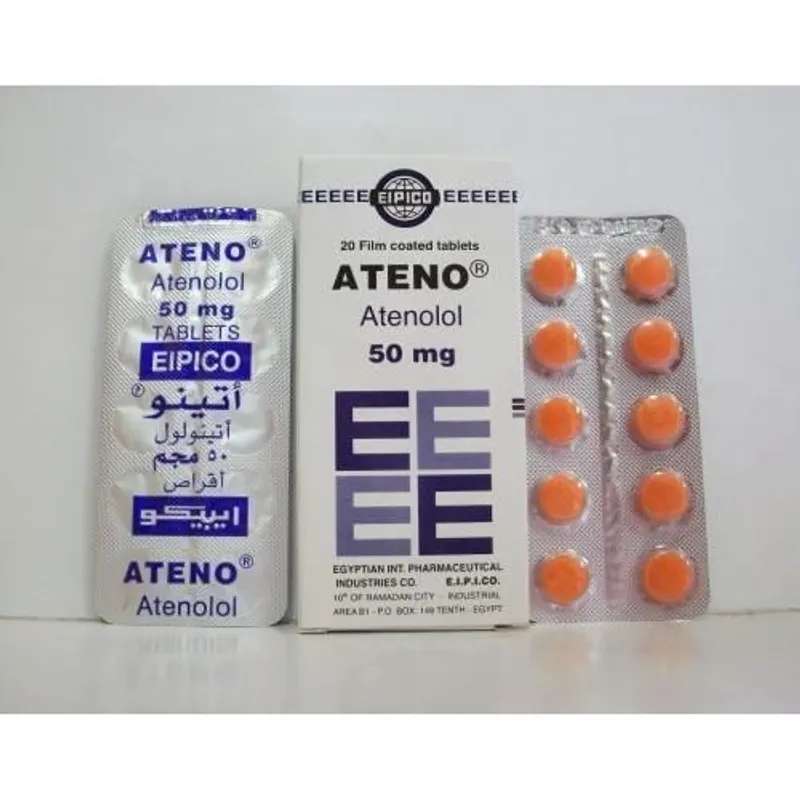
ateno 50mg 20 f.c.tab
سعر اتينو 50 مجم 20 قرص في صيدلية عبدالخالق وجمال: 20 ج.م.
علاج لمرض ارتفاع ضغط الدم.
Drug Monograph — atenolol
Ateno دواء يحتوي على المادة الفعالة atenolol. المعلومات التالية عن المادة الفعالة للتثقيف الصحي. الأتينولول حاصر بيتا انتقائي للقلب؛ يبطّئ النبض ويخفض ضغط الدم وعبء القلب.
يُستخدم لعلاج ارتفاع ضغط الدم والذبحة الصدرية وبعض اضطرابات نظم القلب حسب وصف الطبيب.
Hypertension Atenolol tablets are indicated for the treatment of hypertension, to lower blood pressure. Lowering blood pressure lowers the risk of fatal and non-fatal cardiovascular events, primarily strokes and myocardial infarctions. These benefits have been seen in controlled trials of antihypertensive drugs from a wide variety of pharmacologic classes including atenolol. Control of high blood pressure should be part of comprehensive cardiovascular risk management, including, as appropriate, lipid control, diabetes management, antithrombotic therapy, smoking cessation, exercise, and limited sodium intake. Many patients will require more than 1 drug to achieve blood pressure goals. For specific advice on goals and management, see published guidelines, such as those of the National High Blood Pressure Education Program’s Joint National Committee on Prevention, Detection, Evaluation, and Treatment of High Blood Pressure (JNC). Numerous antihypertensive drugs, from a variety of pharmacologic classes and with different mechanisms of action, have been shown in randomized controlled trials to reduce cardiovascular morbidity and mortality, and it can be concluded that it is blood pressure reduction, and not some other pharmacologic property of the drugs, that is largely responsible for those benefits. The largest and most consistent cardiovascular outcome benefit has been a reduction in the risk of stroke, but reductions in myocardial infarction and cardiovascular mortality also have been seen regularly. Elevated systolic or diastolic pressure causes increased cardiovascular risk, and the absolute risk increase per mmHg is greater at higher blood pressures, so that even modest reductions of severe hypertension can provide substantial benefit. Relative risk reduction from blood pressure reduction is similar across populations with varying absolute risk, so the absolute benefit is greater in patients who are at higher risk independent of their hypertension (for example, patients with diabetes or hyperlipidemia), and such patients would be expected to benefit from more aggressive treatment to a lower blood pressure goal. Some antihypertensive drugs have smaller blood pressure effects (as monotherapy) in black patients, and many antihypertensive drugs have additional approved indications and effects (e.g., on angina, heart failure, or diabetic kidney disease). These considerations may guide selection of therapy....
دواء بوصفة: مرة واحدة يومياً غالباً بجرعة يحددها الطبيب. لا يُوقف فجأة تجنباً لخفقان أو ارتفاع ضغط ارتدادي.
Hypertension The initial dose of atenolol is 50 mg given as one tablet a day either alone or added to diuretic therapy. The full effect of this dose will usually be seen within one to two weeks. If an optimal response is not achieved, the dosage should be increased to atenolol 100 mg given as one tablet a day. Increasing the dosage beyond 100 mg a day is unlikely to produce any further benefit. Atenolol may be used alone or concomitantly with other antihypertensive agents including thiazide-type diuretics, hydralazine, prazosin, and alpha-methyldopa. Angina Pectoris The initial dose of atenolol is 50 mg given as one tablet a day. If an optimal response is not achieved within one week, the dosage should be increased to atenolol 100 mg given as one tablet a day. Some patients may require a dosage of 200 mg once a day for optimal effect. Twenty-four hour control with once daily dosing is achieved by giving doses larger than necessary to achieve an immediate maximum effect. The maximum early effect on exercise tolerance occurs with doses of 50 mg to 100 mg, but at these doses the effect at 24 hours is attenuated, averaging about 50% to 75% of that observed with once a day oral doses of 200 mg. Acute Myocardial Infarction In patients with definite or suspected acute myocardial infarction, treatment with atenolol I.V. injection should be initiated as soon as possible after the patient's arrival in the hospital and after eligibility is established. Such treatment should be initiated in a coronary care or similar unit immediately after the patient's hemodynamic condition has stabilized. Treatment should begin with the intravenous administration of 5 mg atenolol over 5 minutes followed by another 5 mg intravenous injection 10 minutes later. Atenolol I.V. injection should be administered under carefully controlled conditions including monitoring of blood pressure, heart rate, and electrocardiogram. Dilutions of atenolol I.V. injection in dextrose injection, sodium chloride injection, or sodium chloride and dextrose injection may be used. These admixtures are stable for 48 hours if they are not used immediately. In patients who tolerate the full intravenous dose (10 mg), atenolol tablets 50 mg should be initiated 10 minutes after the last intravenous dose followed by another 50 mg oral dose 12 hours later. Thereafter, atenolol can be given orally either 100 mg once daily or 50 mg twice a day for a further 6 to 9 days or until discharge from the hospital....
قد يسبب تعباً وبرودة الأطراف وبطء نبض ودوخة.
Most adverse effects have been mild and transient. The frequency estimates in the following table were derived from controlled studies in hypertensive patients in which were either volunteered by the patient (U.S. studies) or elicited, e.g., by checklist (foreign studies). The reported frequency of elicited adverse effects was higher for both atenolol and placebo-treated patients than when these reactions were volunteered. Where frequency of adverse effects of atenolol and placebo is similar, causal relationship to atenolol is uncertain. Volunteered (U.S. Studies) Total - Volunteered and Elicited (Foreign + U.S. Studies) Atenolol (n=164) % Placebo (n=206) % Atenolol (n=399) % Placebo (n=407) % CARDIOVASCULAR Bradycardia 3 0 3 0 Cold Extremities 0 0.5 12 5 Postural Hypotension 2 1 4 5 Leg Pain 0 0.5 3 1 CENTRAL NERVOUS SYSTEM/NEUROMUSCULAR Dizziness 4 1 13 6 Vertigo 2 0.5 2 0.2 Light-headedness 1 0 3 0.7 Tiredness 0.6 0.5 26 13 Fatigue 3 1 6 5 Lethargy 1 0 3 0.7 Drowsiness 0.6 0 2 0.5 Depression 0.6 0.5 12 9 Dreaming 0 0 3 1 GASTROINTESTINAL Diarrhea 2 0 3 2 Nausea 4 1 3 1 RESPIRATORY (See WARNINGS ) Wheeziness 0 0 3 3 Dyspnea 0.6 1 6 4 Acute Myocardial Infarction In a series of investigations in the treatment of acute myocardial infarction, bradycardia and hypotension occurred more commonly, as expected for any beta-blocker, in atenolol-treated patients than in control patients. However, these usually responded to atropine and/or to withholding further dosage of atenolol. The incidence of heart failure was not increased by atenolol. Inotropic agents were infrequently used. The reported frequency of these and other events occurring during these investigations is given in the following table. In a study of 477 patients, the following adverse events were reported during either intravenous and/or oral atenolol administration: Conventional Therapy Plus Atenolol (n=244) Conventional Therapy Alone (n=233) Bradycardia 43 (18%) 24 (10%) Hypotension 60 (25%) 34 (15%) Bronchospasm 3 (1.2%) 2 (0.9%) Heart Failure 46 (19%) 56 (24%) Heart Block 11 (4.5%) 10 (4.3%) BBB + Major Axis Deviation 16 (6.6%) 28 (12%) Supraventricular Tachycardia 28 (11.5%) 45 (19%) Atrial Fibrillation 12 (5%) 29 (11%) Atrial Flutter 4 (1.6%) 7 (3%) Ventricular Tachycardia 39 (16%) 52 (22%) Cardiac Reinfarction 0 (0%) 6 (2.6%) Total Cardiac Arrests 4 (1.6%) 16 (6.9%) Nonfatal Cardiac Arrests 4 (1.6%) 12 (5.1%) Deaths 7 (2.9%) 16 (6.9%) Cardiogenic Shock 1 (0.4%) 4 (1....
لا يُستخدم مع بطء نبض شديد أو بعض حالات إحصار القلب أو الربو الشديد غير المنضبط أو قصور القلب غير المستقر.
Atenolol tablets are contraindicated in sinus bradycardia, heart block greater than first degree, cardiogenic shock, and overt cardiac failure. (See WARNINGS .) Atenolol tablets are contraindicated in those patients with a history of hypersensitivity to the atenolol or any of the drug product’s components.
Ateno متوفر في شكل أقراص بتركيز 50MG. العبوة تحتوي على 20 قرص.
يُحفظ في درجة حرارة الغرفة بعيداً عن الرطوبة ومتناول الأطفال.
هذه المعلومات الدوائية للتثقيف الصحي العام فقط، ولا تُغني عن استشارة الصيدلي أو الطبيب المختص. لا تبدأ أو توقف أو تغيّر جرعة أي دواء بدون إشراف طبي.
00 · Empty
لا توجد تقييمات معتمدة لهذا المنتج بعد. كن أول من يقيّم!