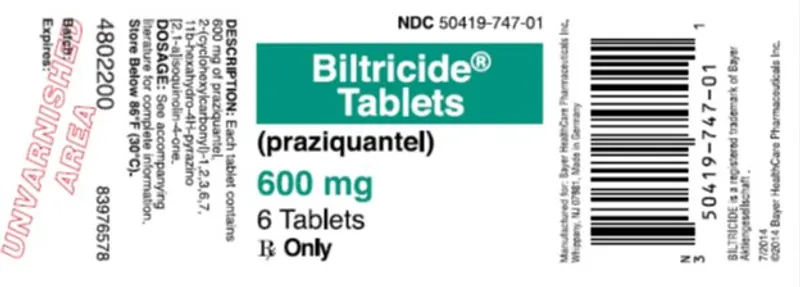
English ReferenceThe following serious or otherwise important are discussed elsewhere in the labeling: • Clinical Deterioration [see ( 5.1 )] • Central Nervous System (CNS) Effects [see ( 5.2 )] • Potential Lack of Efficacy During the Acute Phase of Schistosomiasis [see ( 5.3 )] • Cardiac Arrhythmias [see ( 5.4 )] • Hepatic Impairment in Hepatosplenic Schistosomiasis Patients [see ( 5.5 )] • Concomitant Administration with Strong Cytochrome P450 Inducers [see ( 5.6 )] The following associated with the use of Biltricide were identified in clinical studies, published literature or postmarketing reports. Because some of these reactions were reported voluntarily from a population of uncertain size, it is not always possible to reliably estimate their frequency or establish a causal relationship to drug exposure. The following were observed in both adults and pediatric patients: General disorders and administration site conditions: malaise, pyrexia Nervous system disorders: headache , dizziness Gastrointestinal disorders: abdominal discomfort, nausea Skin and subcutaneous tissue disorders: urticaria Such may be more frequent and/or serious in patients with a heavy worm burden. Additional reported from worldwide post marketing experience and from publications with Biltricide and various formulations of praziquantel include: Blood and lymphatic system disorders: eosinophilia Cardiac disorders: arrhythmia (including bradycardia, ectopic rhythms, ventricular fibrillation, AV blocks) Ear and labyrinth disorders: vertigo, tinnitus Eye disorders: visual disturbance Gastrointestinal disorders: abdominal pain, bloody diarrhea, vomiting General disorders and administration site conditions: polyserositis, asthenia, fatigue, gait disturbance Hepatobiliary disorders: hepatitis Immune system disorders: allergic reaction, generalized hypersensitivity, anaphylactic reaction Metabolism and nutrition disorders: anorexia Musculoskeletal and connective tissue disorders: myalgia Nervous system disorders: convulsion, somnolence, intention tremor Respiratory, thoracic and mediastinal disorders: pneumonitis, dyspnea, wheezing Skin and subcutaneous tissue disorders: pruritus, rash, Stevens-Johnson syndrome Pediatric patients 1 to 17 years of age treated with Biltricide and various formulations of praziquantel experienced similar as those observed in adult patients. The reported were malaise, headache, dizziness, abdominal discomfort (with or without nausea), pyrexia and urticaria....