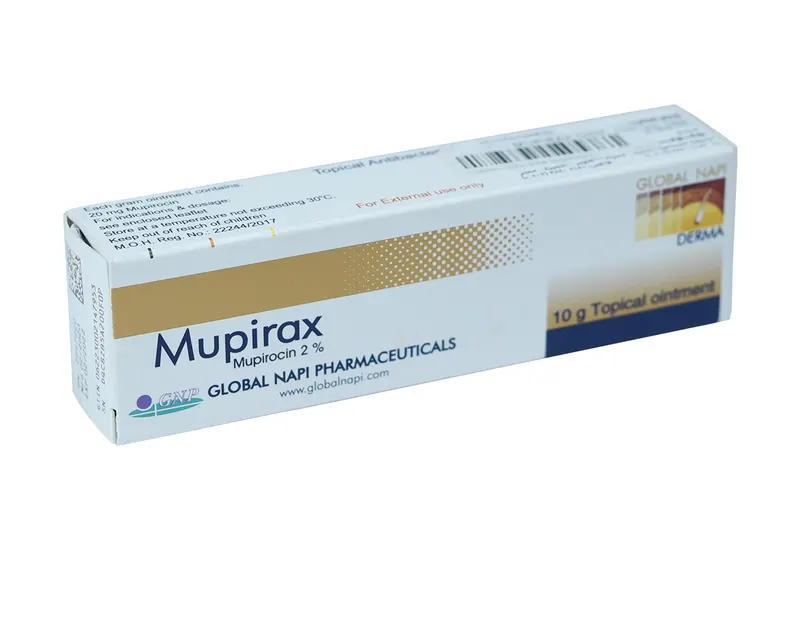
English ReferenceThe following are discussed in more detail in other sections of the labeling: Severe Allergic Reactions [see ( 5.1 )] Eye Irritation [see ( 5.2 )] Local Irritation [see ( 5.3 )] Clostridium difficile -Associated Diarrhea [see ( 5.4 )] The most frequent (at least 1%) were headache, rash, and nausea. ( 6.1 ) To report SUSPECTED , contact FDA at 1-800-FDA-1088 or www.fda.gov/medwatch . 6.1 Clinical Trials Experience Because clinical trials are conducted under widely varying conditions, adverse reaction rates observed in the clinical trials of a drug cannot be directly compared with rates in the clinical trials of another drug and may not reflect the rates observed in practice. In 2 randomized, double‑blind, double‑dummy trials, 339 subjects were treated with topical mupirocin cream plus oral placebo. occurred in 28 (8.3%) subjects. The following were reported by at least 1% of subjects in connection with the use of mupirocin cream in clinical trials: headache (1.7%), rash (1.1%), and nausea (1.1%). Other which occurred in less than 1% of subjects were: abdominal pain, burning at application site, cellulitis, dermatitis, dizziness, pruritus, secondary wound infection, and ulcerative stomatitis. In a supportive trial in the treatment of secondarily infected eczema, 82 subjects were treated with mupirocin cream. The incidence of was as follows: nausea (4.9%), headache and burning at application site (3.6% each), pruritus (2.4%), and 1 report each of abdominal pain, bleeding secondary to eczema, pain secondary to eczema, hives, dry skin, and rash. 6.2 Postmarketing Experience In addition to reported from clinical trials, the following reactions have been identified during postmarketing use of mupirocin cream. Because they are reported voluntarily from a population of unknown size, estimates of frequency cannot be made. These reactions have been chosen for inclusion due to a combination of their seriousness, frequency of reporting, or potential causal relationship to mupirocin cream. Immune System Disorders Systemic allergic reactions, including anaphylaxis, urticaria, angioedema, and generalized rash [see ( 5.1 )] .