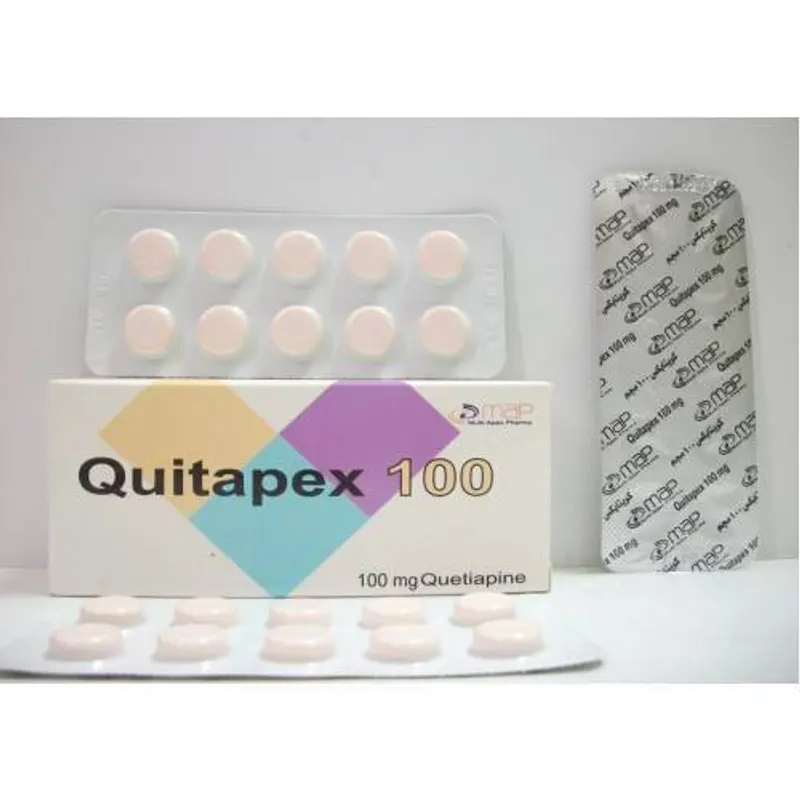
كويتابيكس 100مجم 30 قرص
quitapex 100mg 30 f.c. tab
سعر كويتابيكس 100مجم 30 قرص في صيدلية عبدالخالق وجمال: 186 ج.م.
أدوية نفسية وعصبية — تُصرف وتُستخدم تحت إشراف الطبيب.
ℹ️ قد يتطلب روشتة طبية
ده دواء بيتصرف تحت إشراف صيدلي، وممكن نطلب منك روشتة حسب الحالة. صيدلي مرخّص بيراجع كل طلب قبل التجهيز — ولو عندك استفسار عن الجرعة أو تعارض مع دواء تاني، كلّمنا قبل ما تطلب.
ارفع روشتتك من هنا ←النشرة الدوائية التفصيلية — Quitapex
Drug Monograph — quetiapine
Quitapex دواء يحتوي على المادة الفعالة quetiapine. المعلومات التالية عن المادة الفعالة للتثقيف الصحي. الكيتيابين مضاد ذهان لا نمطي ومثبّت للمزاج؛ يعدّل نشاط الدوبامين والسيروتونين.
12.1 Mechanism of Action The mechanism of action of quetiapine in the listed indications is unclear. However, the efficacy of quetiapine in these indications could be mediated through a combination of dopamine type 2 (D 2 ) and serotonin type 2 (5HT 2 ) antagonism. The active metabolite, N-desalkyl quetiapine (norquetiapine), has similar activity at D 2 , but greater activity at 5HT2A receptors, than the parent drug (quetiapine).
هذه المعلومات الدوائية للتثقيف الصحي العام فقط، ولا تُغني عن استشارة الصيدلي أو الطبيب المختص. لا تبدأ أو توقف أو تغيّر جرعة أي دواء بدون إشراف طبي.
بدائل كويتابيكس 100مجم 30 قرص بنفس المادة الفعالة
- كويتابيكس 25مجم 30 قرص87 ج.م
- كويتابيكس 200مجم 30 قرص261 ج.م
- كويتابيكس 400مجم اكس ار 30 قرص387 ج.م
استشر الصيدلي أو الطبيب قبل التبديل بين الأدوية.
كل البدائل ومقارنة الأسعار ←آراء العملاء
00 · Empty
لا توجد تقييمات معتمدة لهذا المنتج بعد. كن أول من يقيّم!