جاري التحميل...
جاري تحميل محتوى الصفحةجاري التحميل...
جاري تحميل محتوى الصفحة
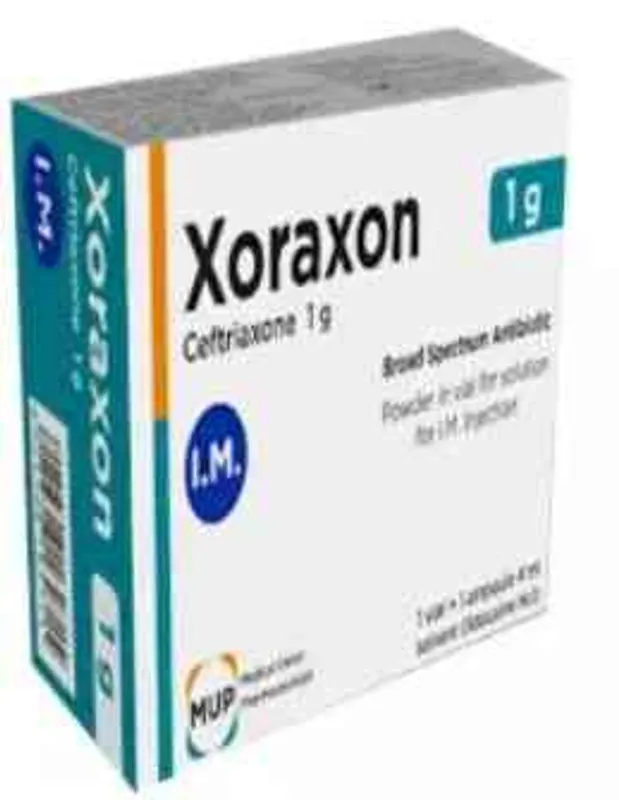
Xoraxon 1gm i.v. vial
سعر زوراكسون 1جم فيال وريد في صيدلية عبدالخالق وجمال: 56 ج.م.
مضاد حيوي قوي في علاج العديد من الالتهابات البكتيرية علاج التهابات الجهاز التنفسي مثل الالتهاب الرئوي علاج التهابات المسالك البولية علاج التهابات الجلد والأنسجة الرخوة علاج التهابات العظام والمفاصل علاج التهابات البطن مثل التهاب الصفاق علاج التهابات الدم (تسمم الدم) يستخدم في علاج بعض حالات التهاب السحايا
Drug Monograph — Ceftriaxone
Xoraxon دواء يحتوي على المادة الفعالة Ceftriaxone. المعلومات التالية عن المادة الفعالة للتثقيف الصحي. السيفترياكسون مضاد حيوي حقني من السيفالوسبورينات الجيل الثالث واسعة الطيف.
يُستخدم بوصفة طبية لعلاج عدوى بكتيرية متوسطة إلى شديدة في مواضع مختلفة من الجسم، ويُعطى بالحقن.
Before instituting treatment with ceftriaxone, appropriate specimens should be obtained for isolation of the causative organism and for determination of its susceptibility to the drug. Therapy may be instituted prior to obtaining results of susceptibility testing. To reduce the development of drug-resistant bacteria and maintain the effectiveness of ceftriaxone for injection, USP and other antibacterial drugs, ceftriaxone for injection, USP should be used only to treat or prevent infections that are proven or strongly suspected to be caused by susceptible bacteria. When culture and susceptibility information are available, they should be considered in selecting or modifying antibacterial therapy. In the absence of such data, local epidemiology and susceptibility patterns may contribute to the empiric selection of therapy. Ceftriaxone for injection, USP is indicated for the treatment of the following infections when caused by susceptible organisms: Lower Respiratory Tract Infections Caused by Streptococcus pneumoniae , Staphylococcus aureus, Haemophilus influenzae, Haemophilus parainfluenzae, Klebsiella pneumoniae, Escherichia coli, Enterobacter aerogenes, Proteus mirabilis or Serratia marcescens . Acute Bacterial Otitis Media Caused by Streptococcus pneumoniae, Haemophilus influenzae (including beta-lactamase producing strains) or Moraxella catarrhalis (including beta-lactamase producing strains). NOTE: In one study lower clinical cure rates were observed with a single dose of ceftriaxone compared to 10 days of oral therapy. In a second study comparable cure rates were observed between single dose ceftriaxone and the comparator. The potentially lower clinical cure rate of ceftriaxone should be balanced against the potential advantages of parenteral therapy (see CLINICAL STUDIES ). Skin and Skin Structure Infections Caused by Staphylococcus aureus, Staphylococcus epidermidis, Streptococcus pyogenes , Viridans group streptococci, Escherichia coli, Enterobacter cloacae, Klebsiella oxytoca, Klebsiella pneumoniae, Proteus mirabilis, Morganella morganii*, Pseudomonas aeruginosa, Serratia marcescens, Acinetobacter calcoaceticus, Bacteroides fragilis * or Peptostreptococcus species. Urinary Tract Infections (complicated and uncomplicated) Caused by Escherichia coli, Proteus mirabilis, Proteus vulgaris, Morganella morganii or Klebsiella pneumoniae ....
دواء بوصفة يُعطى بالحقن الوريدي أو العضلي بواسطة مختص — الجرعة والمدة يحددهما الطبيب حسب العدوى.
Ceftriaxone may be administered intravenously or intramuscularly. Do not use diluents containing calcium, such as Ringer’s solution or Hartmann’s solution, to reconstitute ceftriaxone vials or to further dilute a reconstituted vial for IV administration because a precipitate can form. Precipitation of ceftriaxone-calcium can also occur when ceftriaxone is mixed with calcium-containing solutions in the same IV administration line. Ceftriaxone must not be administered simultaneously with calcium-containing IV solutions, including continuous calcium-containing infusions such as parenteral nutrition via a Y-site. However, in patients other than neonates, ceftriaxone and calcium-containing solutions may be administered sequentially of one another if the infusion lines are thoroughly flushed between infusions with a compatible fluid (see WARNINGS ). There have been no reports of an interaction between ceftriaxone and oral calcium-containing products or interaction between intramuscular ceftriaxone and calcium-containing products (IV or oral). Neonates Hyperbilirubinemic neonates, especially prematures, should not be treated with ceftriaxone for injection. Ceftriaxone is contraindicated in premature neonates (see ). Ceftriaxone is contraindicated in neonates (≤ 28 days) if they require (or are expected to require) treatment with calcium-containing IV solutions, including continuous calcium-containing infusions such as parenteral nutrition because of the risk of precipitation of ceftriaxone-calcium (see ). Intravenous doses should be given over 60 minutes in neonates to reduce the risk of bilirubin encephalopathy. Pediatric Patients For the treatment of skin and skin structure infections, the recommended total daily dose is 50 to 75 mg/kg given once a day (or in equally divided doses twice a day). The total daily dose should not exceed 2 grams. For the treatment of acute bacterial otitis media, a single intramuscular dose of 50 mg/kg (not to exceed 1 gram) is recommended (see ). For the treatment of serious miscellaneous infections other than meningitis, the recommended total daily dose is 50 to 75 mg/kg, given in divided doses every 12 hours. The total daily dose should not exceed 2 grams. In the treatment of meningitis, it is recommended that the initial therapeutic dose be 100 mg/kg (not to exceed 4 grams). Thereafter, a total daily dose of 100 mg/kg/day (not to exceed 4 grams daily) is recommended....
قد يسبب ألماً مكان الحقن وطفحاً وإسهالاً وتغيّراً في تحاليل الدم. الحساسية الشديدة تستدعي إيقافه فوراً.
Ceftriaxone is generally well tolerated. In clinical trials, the following , which were considered to be related to ceftriaxone therapy or of uncertain etiology, were observed: Local Reactions Pain, induration and tenderness was 1% overall. Phlebitis was reported in <1% after IV administration. The incidence of warmth, tightness or induration was 17% (3/17) after IM administration of 350 mg/mL and 5% (1/20) after IM administration of 250 mg/mL. General Disorders and Administration Site Conditions Injection site pain (0.6%) Hypersensitivity Rash (1.7%). Less frequently reported (<1%) were pruritus, fever or chills. Infections and Infestations Genital fungal infection (0.1%) Hematologic Eosinophilia (6%), thrombocytosis (5.1%) and leukopenia (2.1%). Less frequently reported (<1%) were anemia, hemolytic anemia, neutropenia, lymphopenia, thrombocytopenia and prolongation of the prothrombin time. Blood and Lymphatic Disorders Granulocytopenia (0.9%), coagulopathy (0.4%) Gastrointestinal Diarrhea/loose stools (2.7%). Less frequently reported (<1%) were nausea or vomiting, and dysgeusia. The onset of pseudomembranous colitis symptoms may occur during or after antibacterial treatment (see WARNINGS ). Hepatic Elevations of aspartate aminotransferase (AST) (3.1%) or alanine aminotransferase (ALT) (3.3%). Less frequently reported (<1%) were elevations of alkaline phosphatase and bilirubin. Renal Elevations of the BUN (1.2%). Less frequently reported (<1%) were elevations of creatinine and the presence of casts in the urine. Central Nervous System Headache or dizziness were reported occasionally (<1%). Genitourinary Moniliasis or vaginitis were reported occasionally (<1%). Miscellaneous Diaphoresis and flushing were reported occasionally (<1%). Investigations Blood creatinine increased (0.6%). Other rarely observed (<0.1%) include abdominal pain, agranulocytosis, allergic pneumonitis, anaphylaxis, basophilia, biliary lithiasis, bronchospasm, colitis, dyspepsia, epistaxis, flatulence, gallbladder sludge, glycosuria, hematuria, jaundice, leukocytosis, lymphocytosis, monocytosis, nephrolithiasis, palpitations, a decrease in the prothrombin time, renal precipitations, seizures, and serum sickness. Post-Marketing Experience In addition to the reported during clinical trials, the following adverse experiences have been reported during clinical practice in patients treated with ceftriaxone....
لا يُستخدم مع حساسية السيفالوسبورينات أو البنسلين الشديدة. لا يُخلط مع محاليل الكالسيوم لدى حديثي الولادة.
Hypersensitivity Ceftriaxone for injection is contraindicated in patients with known hypersensitivity to ceftriaxone, any of its excipients or to any other cephalosporin. Patients with previous hypersensitivity reactions to penicillin and other beta lactam antibacterial agents may be at greater risk of hypersensitivity to ceftriaxone (see Warnings – Hypersensitivity Reactions ). Neonates Premature neonates : Ceftriaxone for injection is contraindicated in premature neonates up to a post-menstrual age of 41 weeks (gestational age + chronological age). Hyperbilirubinemic neonates : Hyperbilirubinemic neonates should not be treated with ceftriaxone for injection. Ceftriaxone can displace bilirubin from its binding to serum albumin, leading to a risk of bilirubin encephalopathy in these patients. Neonates Requiring Calcium Containing IV Solutions Ceftriaxone for injection is contraindicated in neonates (≤ 28 days) if they require (or are expected to require) treatment with calcium-containing IV solutions, including continuous calcium-containing infusions such as parenteral nutrition because of the risk of precipitation of ceftriaxone-calcium (see CLINICAL PHARMACOLOGY , WARNINGS and ). Cases of fatal outcomes in which a crystalline material was observed in the lungs and kidneys at autopsy have been reported in neonates receiving ceftriaxone for injection and calcium-containing fluids. In some of these cases, the same intravenous infusion line was used for both ceftriaxone for injection and calcium-containing fluids and in some a precipitate was observed in the intravenous infusion line. There have been no similar reports in patients other than neonates. Lidocaine Intravenous administration of ceftriaxone solutions containing lidocaine is contraindicated. When lidocaine solution is used as a solvent with ceftriaxone for intramuscular injection, exclude all to lidocaine. Refer to the prescribing information of lidocaine.
Xoraxon متوفر في شكل فيال للحقن بتركيز 1GM.
يُحفظ حسب تعليمات النشرة؛ المحلول المحضّر يُستخدم في المدة المحددة.
Storage Prior to Reconstitution Store at 20° to 25°C (68° to 77°F) [see USP Controlled Room Temperature]. Protect from light.
هذه المعلومات الدوائية للتثقيف الصحي العام فقط، ولا تُغني عن استشارة الصيدلي أو الطبيب المختص. لا تبدأ أو توقف أو تغيّر جرعة أي دواء بدون إشراف طبي.
00 · Empty
لا توجد تقييمات معتمدة لهذا المنتج بعد. كن أول من يقيّم!